Expert MEP Consultancy Service mep Dynamic

“Middle East War Impact on Climate and Future HVAC Technologies”
Explore how war and climate change in the Middle East are reshaping HVAC technologies. Learn about green cooling, district cooling, and future HVAC innovations
SMART INFRASTRUCTURESUSTAINABLE ENERGYSUSTAINABLE BUILDINGIMPACT OF WAR ON CLIMATE MIDDLE EAST
mepdynamic
3/10/20264 min read
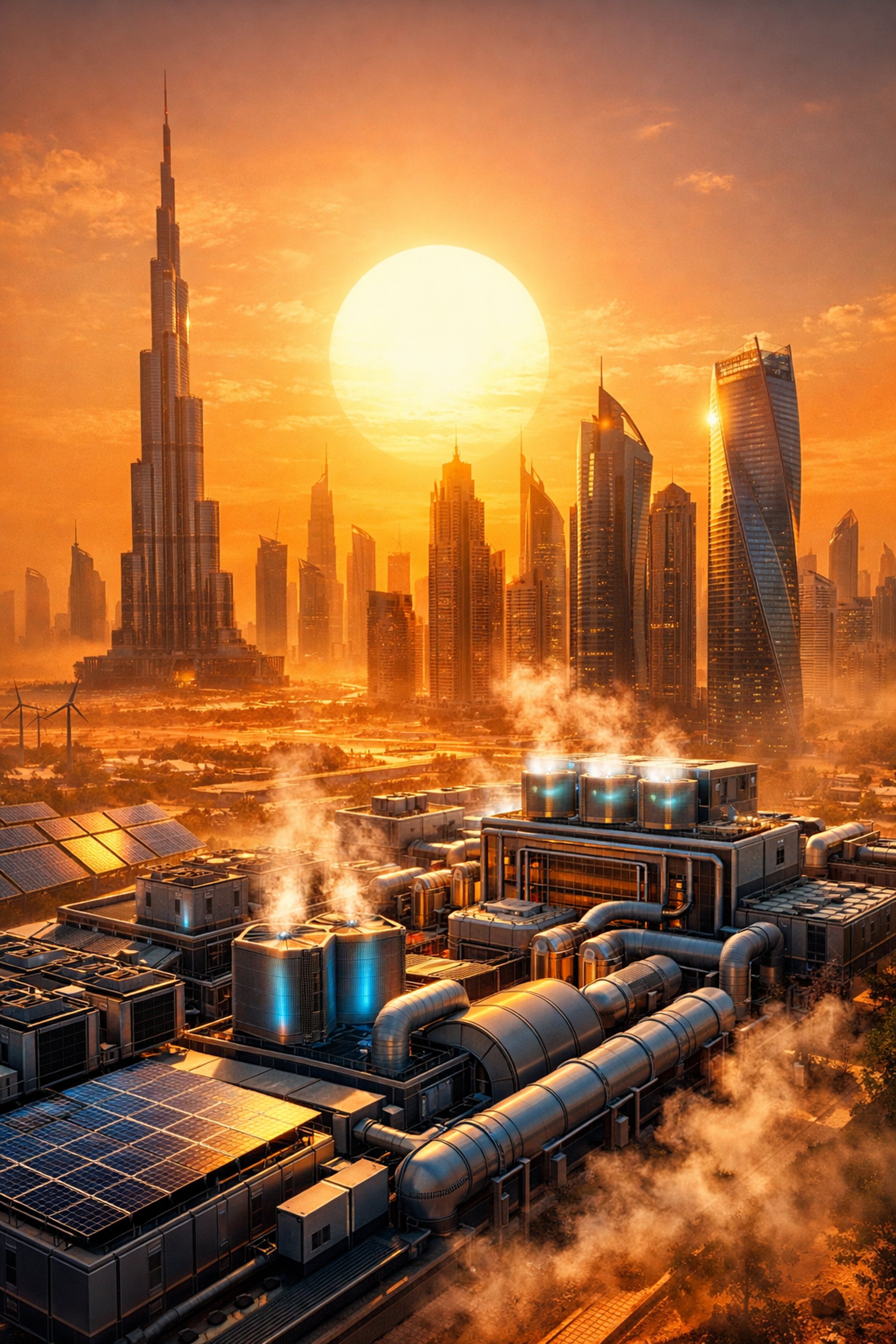
Why Future Wars Will Be Fought Over Cooling, Energy and Climate in the Middle East
My post content
Middle East War Impact on Climate and Future HVAC Technologies
The Middle East is one of the most climate-sensitive regions in the world. Countries such as the United Arab Emirates, Iran, Saudi Arabia, Qatar, and Kuwait experience some of the highest summer temperatures on Earth, often exceeding 45–50°C. In such conditions, heating, ventilation, and air conditioning (HVAC) systems become essential infrastructure rather than luxury amenities.However, the region is now facing a complex combination of challenges: geopolitical conflict, rising temperatures due to climate change, increasing urbanization, and growing energy demand. Military conflicts and regional tensions have the potential to damage critical infrastructure such as power plants, oil facilities, and urban buildings. When infrastructure is destroyed or disrupted, cooling systems, electricity supply, and urban living conditions are significantly affected.At the same time, climate change is intensifying heat waves across the Middle East, placing even more pressure on existing cooling infrastructure. According to the International Energy Agency, cooling demand in hot regions is expected to increase dramatically over the coming decades.These challenges are forcing governments, engineers, and urban planners to rethink how cities are built and cooled. In many ways, reconstruction after conflict may accelerate the adoption of new, sustainable HVAC technologies.This article explores how war and climate stress affect the Middle East and how emerging HVAC technologies can support resilient and sustainable urban development.Impact of War on Climate and Infrastructure
Destruction of Critical Infrastructure
War can significantly damage infrastructure systems that support cooling technologies. Power plants, electricity transmission networks, water systems, and industrial facilities are all vulnerable during conflicts.When power generation facilities are damaged, electricity supply becomes unstable. Since HVAC systems rely heavily on electrical power, cooling services may become unreliable during such periods.Infrastructure damage can also disrupt water desalination plants, which are crucial in many Middle Eastern countries. Without desalinated water, both human consumption and cooling systems that rely on water-based chillers may be affected.
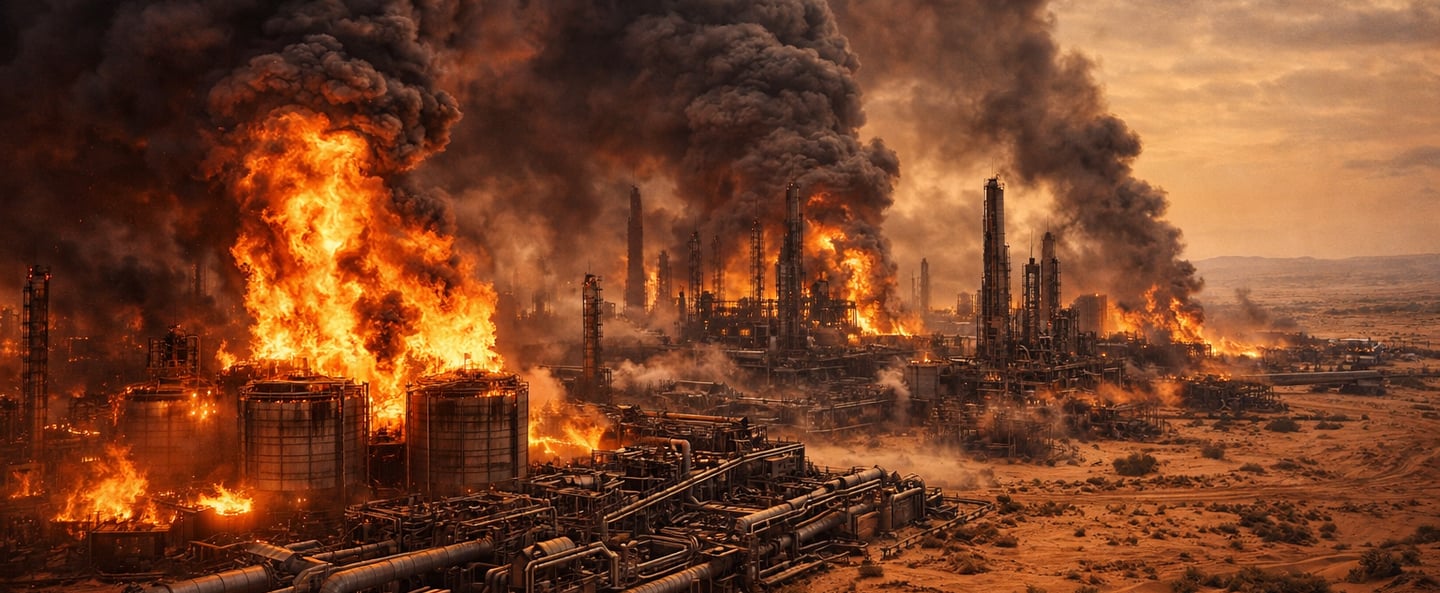
Environmental Impact of Military Conflict
Military conflicts also contribute to environmental degradation. Explosions, fuel combustion, and industrial fires release greenhouse gases and pollutants into the atmosphere.
Environmental consequences may include:
Increased air pollution
Release of greenhouse gases
Soil contamination
Water pollution
Damage to natural ecosystems
These environmental impacts can worsen the regional climate situation, further increasing the need for efficient cooling technologies.
Reconstruction and Technological Opportunity
History has shown that reconstruction after conflict often leads to modernization. Cities damaged by war are frequently rebuilt with more advanced infrastructure and technology.
For engineers and developers, rebuilding presents an opportunity to integrate next-generation HVAC systems, smart building technologies, and renewable energy solutions.
Instead of replicating outdated systems, new developments can adopt sustainable cooling technologies that reduce energy consumption and environmental impact.
Future HVAC Technologies for the Middle East
District Cooling Systems
District cooling has become one of the most effective cooling strategies for large urban areas.
In a district cooling system, a central plant produces chilled water that is distributed through insulated pipelines to multiple buildings. This approach is significantly more efficient than installing individual chillers in every building.
Benefits of district cooling include:
Energy savings of up to 40%
Lower maintenance costs
Reduced carbon emissions
Improved reliability for large developments
Cities such as Dubai and Abu Dhabi already operate some of the world’s largest district cooling networks.
External reference:
https://www.empower.ae
Internal link suggestion for your website:
District Cooling Technology Guide – MEP Dynamic
Solar Powered Cooling
The Middle East has abundant solar energy potential. Solar-powered HVAC systems are increasingly being explored as a sustainable alternative to traditional cooling technologies.
Solar cooling systems can operate using photovoltaic panels that power electric chillers or through solar thermal energy used in absorption chillers.
Advantages include:
Reduced electricity consumption
Lower carbon emissions
Increased energy security
Sustainable cooling during peak summer demand
Solar cooling is particularly suitable for regions with strong sunlight, making it an ideal solution for Gulf countries.
External reference:
https://www.irena.org
Smart HVAC Systems with AI
Artificial intelligence and smart building technologies are transforming the HVAC industry.
AI-powered systems can monitor building occupancy, weather conditions, and energy consumption to optimize cooling performance automatically.
Smart HVAC systems can:
Adjust cooling based on occupancy levels
Predict maintenance needs
Reduce energy waste
Improve indoor comfort
These technologies are becoming essential for modern smart cities and large infrastructure projects.
Internal link suggestion:
Smart Building HVAC Solutions – MEP Dynamic
Halogen Free Refrigeration Systems
Environmental regulations are pushing the HVAC industry toward refrigerants with lower environmental impact.
Traditional refrigerants such as CFCs and HCFCs have high ozone depletion and global warming potential. New alternatives include:
Hydrofluoroolefins (HFOs)
Natural refrigerants such as CO₂
Ammonia-based refrigeration systems
These halogen-free refrigerants reduce environmental impact while maintaining high cooling efficiency.
External reference:
https://www.ashrae.org
Preparing for Future Summers
Climate models suggest that Middle Eastern summers will become even hotter in the coming decades. Cities must prepare by developing climate-resilient infrastructure.
Important strategies include:
Designing energy-efficient buildings
Improving building insulation
Installing reflective roofing materials
Deploying renewable energy systems
Implementing advanced HVAC technologies
MEP engineers will play a critical role in designing systems that ensure comfort and safety in extreme climates.
Internal link suggestion:
Energy Efficient HVAC Design – MEP Dynamic
Opportunities for MEP Engineers
The transformation of cooling infrastructure creates major opportunities for professionals in the MEP industry.
Areas of growth include:
Sustainable HVAC design
Green building consulting
District cooling infrastructure
Smart building automation
Renewable energy integration
Engineers who specialize in energy-efficient building systems will be in high demand as governments and developers focus on climate resilience


Solutions
Tailored MEP services for safety and efficiency.
Consultancy
Engineering
+91-7015507519
© 2025. All rights reserved.