Expert MEP Consultancy Service mep Dynamic

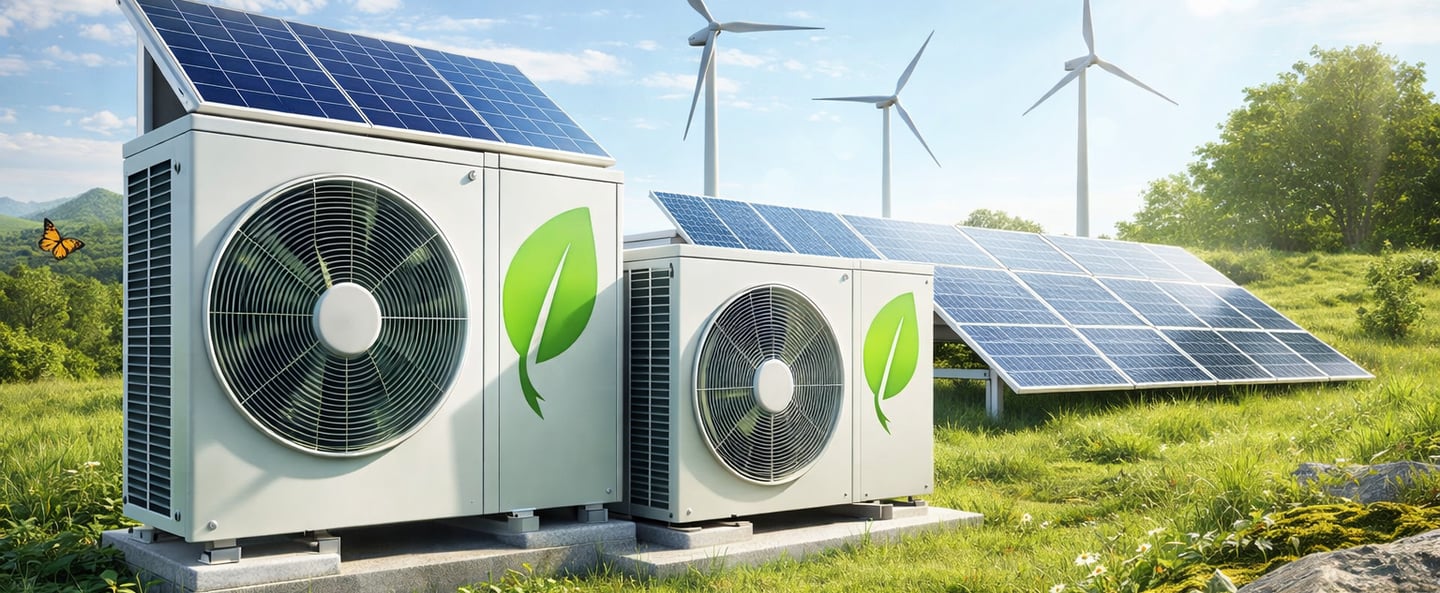
Green HVAC Systems: Energy Efficient Cooling for Hot Climate Regions
Heating, Ventilation, and Air Conditioning (HVAC) systems play a crucial role in maintaining indoor comfort in residential, commercial, and industrial buildings. In regions with extremely high temperatures such as India, the Middle East, and parts of Africa, HVAC systems consume a large amount of energy. Traditional cooling technologies rely heavily on electricity and refrigerants that can harm the environment.
mep dynamic
3/11/20264 min read
My post content
What is a Green HVAC System?
A green HVAC system refers to heating and cooling technologies that minimize environmental impact while maintaining high efficiency. These systems are designed to reduce electricity consumption and greenhouse gas emissions.
Green HVAC systems focus on three main objectives:
Energy efficiency
Environmental sustainability
Reduced operating costs
Unlike traditional HVAC systems, green systems use advanced components such as variable speed compressors, intelligent thermostats, and natural refrigerants.
Importance of Green HVAC in Hot Climate Regions
Countries with hot climates face significant challenges related to cooling demand. Buildings require continuous air conditioning to maintain comfortable indoor temperatures. This leads to high electricity consumption and increased pressure on power grids.
Green HVAC systems help address these challenges by improving cooling efficiency and reducing energy usage.
Key benefits include
1. Reduced Energy Consumption
Energy-efficient HVAC systems can reduce electricity usage by 30–50% compared to conventional systems.
2. Lower Carbon Emissions
Green cooling technologies use environmentally friendly refrigerants and renewable energy sources.
3. Lower Operating Costs
Efficient HVAC systems reduce energy bills and maintenance costs.
4. Improved Indoor Air Quality
Modern green HVAC systems include advanced filtration and ventilation systems that improve air quality.
Types of Green HVAC Systems
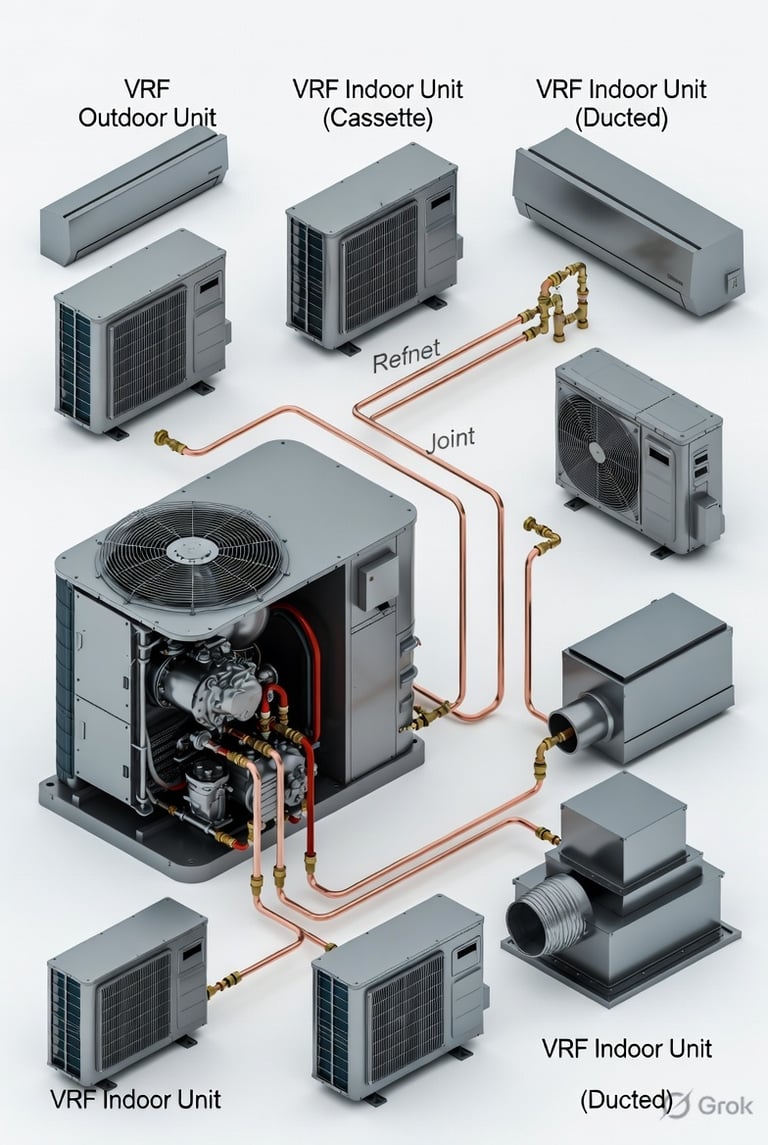
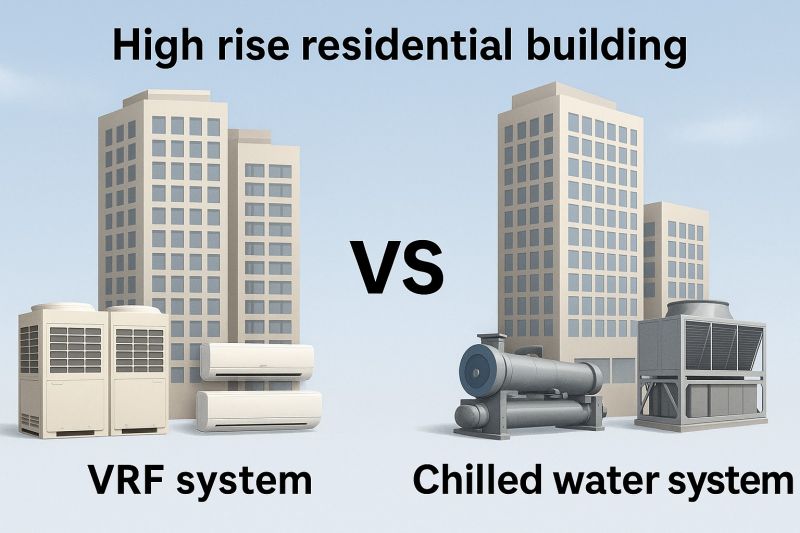
1. Variable Refrigerant Flow (VRF) Systems
VRF systems are one of the most efficient HVAC technologies available today. These systems use variable speed compressors to control refrigerant flow according to cooling demand.
Advantages of VRF systems include:
High energy efficiency
Flexible installation
Precise temperature control
Reduced electricity consumption
VRF systems are widely used in commercial buildings, hotels, and hospitals.
Two common VRF types
1️⃣ Heat Pump System
Cooling OR heating at one time
Used in offices, apartments
2️⃣ Heat Recovery System
Cooling and heating simultaneously
Used in hotels and hospitals
VRF System Installation in Commercial Buildings
VRF vs VRV (Important Concept)
Many engineers think they are different systems, but actually:
VRV = Variable Refrigerant Volume
VRF = Variable Refrigerant Flow
They refer to the same technology; the only difference is naming. VRV is the trademark used by Daikin Industries, while other manufacturers use the term VRF.
2. Geothermal HVAC Systems
Geothermal systems use the natural heat stored underground to provide heating and cooling. These systems circulate water or refrigerant through underground pipes to exchange heat with the earth.
Benefits include:
Extremely high efficiency
Low operating cost
Long system lifespan
Environmentally friendly operation
Although installation costs can be high, geothermal systems provide long-term energy savings.
3. Solar Powered HVAC Systems
Solar HVAC systems use solar panels to generate electricity for air conditioning systems. These systems are particularly useful in sunny regions where solar energy is abundant.
Key advantages:
Renewable energy source
Reduced electricity bills
Lower carbon footprint
Sustainable cooling solution
Solar HVAC systems are gaining popularity in residential buildings and commercial complexes.
4. District Cooling Systems
District cooling systems provide centralized cooling for multiple buildings through a network of chilled water pipelines.
These systems are commonly used in large cities and urban developments.
Advantages include:
Higher efficiency compared to individual systems
Lower maintenance costs
Reduced electricity consumption
Better environmental performance
District cooling is widely used in large urban projects in the Middle East.
Environmentally Friendly Refrigerants
Traditional refrigerants such as CFCs and HCFCs damage the ozone layer and contribute to global warming. Modern green HVAC systems use environmentally friendly refrigerants that have lower environmental impact.
Some commonly used natural refrigerants include:
Carbon Dioxide (CO₂)
CO₂ is a natural refrigerant with low environmental impact and high efficiency.
Ammonia (NH₃)
Ammonia is widely used in industrial refrigeration systems because of its high efficiency.
Hydrocarbons (Propane and Isobutane)
Hydrocarbon refrigerants have very low global warming potential and are increasingly used in modern HVAC systems.
Smart HVAC Technology
Smart HVAC systems use sensors, automation, and artificial intelligence to optimize energy usage. These systems monitor temperature, humidity, occupancy, and outdoor conditions to adjust cooling performance.
Features of smart HVAC systems include:
Smart thermostats
Automated temperature control
Energy monitoring systems
Remote operation through mobile apps
These technologies improve system efficiency and reduce energy waste.
Green HVAC and Sustainable Buildings
Green HVAC systems play an important role in sustainable construction. Modern buildings are designed to reduce energy consumption and environmental impact.
Green building certification programs such as LEED and IGBC encourage the use of energy-efficient HVAC systems.
Sustainable buildings often include:
High efficiency HVAC equipment
Advanced insulation
Natural ventilation systems
Renewable energy integration
These features help reduce overall building energy consumption.
Future of Green HVAC Technology
The HVAC industry is rapidly evolving as engineers develop new technologies to improve energy efficiency. Future cooling technologies may include:
AI-controlled HVAC systems
Advanced heat pump technology
Magnetic cooling systems
Ultra-low global warming refrigerants
As global temperatures continue to rise, the demand for sustainable cooling technologies will increase significantly.
Conclusion
Green HVAC systems are essential for creating sustainable and energy-efficient buildings. These systems reduce electricity consumption, minimize environmental impact, and provide comfortable indoor environments.
In hot climate regions, adopting green HVAC technology is critical for managing energy demand and reducing carbon emissions. With advancements in smart technology, renewable energy integration, and environmentally friendly refrigerants, the future of HVAC systems is becoming more sustainable and efficient.
Investing in green HVAC systems not only benefits the environment but also provides long-term economic advantages for building owners and businesses.


Solutions
Tailored MEP services for safety and efficiency.
Consultancy
Engineering
+91-7015507519
© 2025. All rights reserved.